Every garage in cottage country tells the same story by March: a grey slab stained with oil, salt rings from the truck, dust that never quite sweeps up, and a cold floor that soaks up whatever the lake and the road bring in. An epoxy system fixes that permanently, if it's installed properly. This guide covers what a real floor costs in Ontario, why the ninety-dollar kits fail, and how to pick a finish.
What epoxy floors cost in Ontario
Published Ontario cost guides land professional epoxy in fairly consistent ranges. Treat these as orientation, not a quote: slab condition, size, and the system chosen move the number, and our written estimates are free.
| System | Typical published range | Where it's used |
|---|---|---|
| Solid colour epoxy | $4.50 – $9 per sq ft | Garages, workshops, utility rooms |
| Decorative flake | $5 – $9 per sq ft | Garages, mudrooms, boathouse floors |
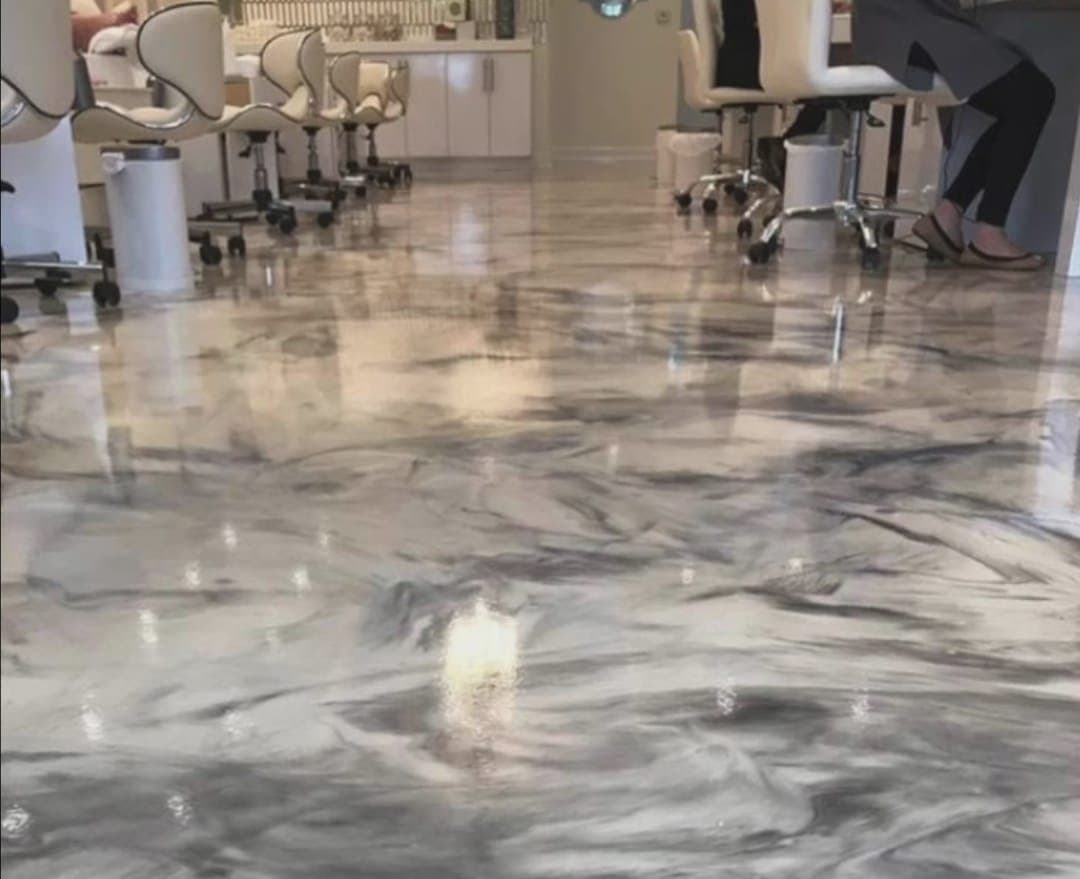
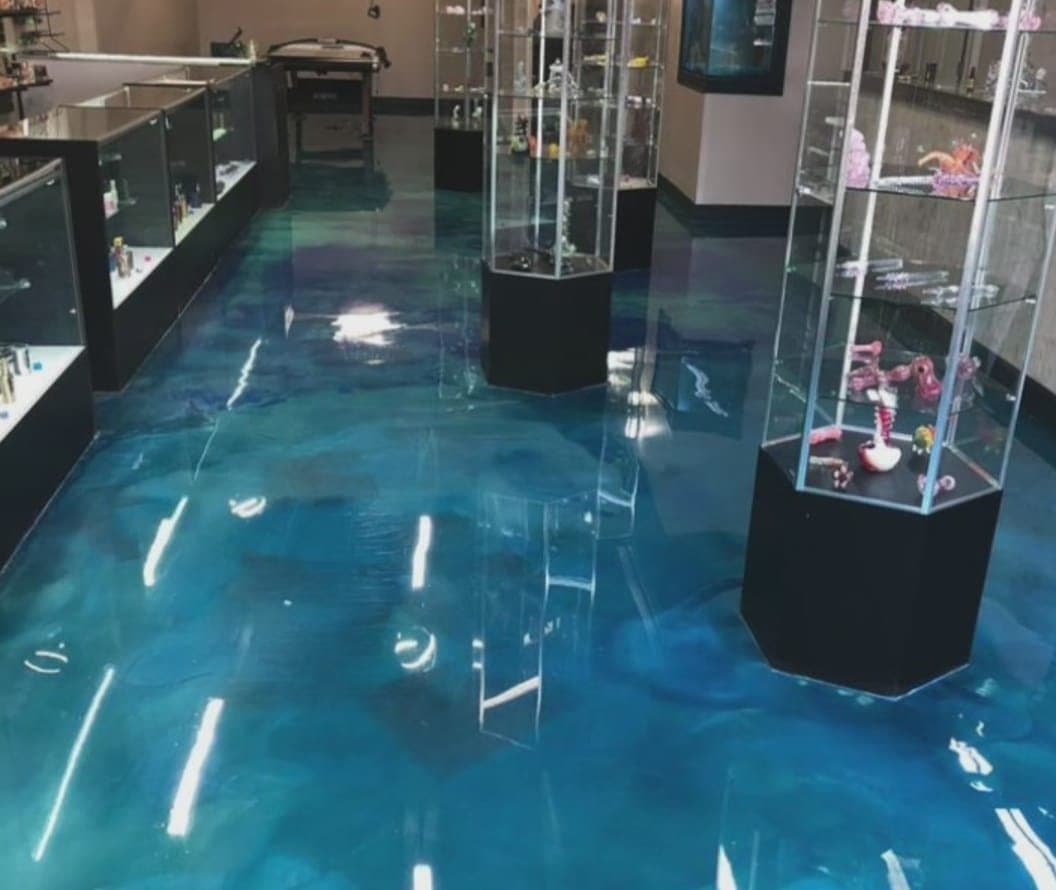
| Metallic epoxy | $8 – $15 per sq ft | Showrooms, salons, retail, finished basements |
| Double garage (about 400 sq ft) | roughly $2,600 – $6,800 | Depends on prep and system |
Smaller floors sit at the top of the per-foot range because setup, grinding, and cure time are the same whether the room is 200 square feet or 800. Heavy repair, moisture mitigation, and a full colour-and-metallic build-up push a floor toward the upper numbers.
Why store kits peel and professional floors don't
The failure stories all trace back to the same thing: a thin coating rolled over concrete that wasn't opened up. Kits rely on acid etching, which barely roughens a smooth or sealed slab, and a single water-based coat a few thousandths of an inch thick. Hot tires lift it, salt gets under it, and by the second spring it's coming up in sheets.
- Diamond grinding opens the surface so the primer keys into the concrete instead of sitting on it
- Cracks, pits, and spalls are ground out and filled before any coating goes down
- A moisture check first: a slab wicking water from below needs a moisture-tolerant primer or a different plan
- Primer, body coat (colour, flake, or metallic), then a hard-wearing clear topcoat, built up in coats
- A UV-stable topcoat so the floor doesn't amber in a garage that gets afternoon sun
- Slip-resistant additive in the top coat where floors get wet
Solid, flake, or metallic
For a working garage, mudroom, or shop, decorative flake is the practical pick: it hides dust and tire marks, adds texture underfoot, and reads clean and bright in a space that usually isn't. Solid colours suit workshops and utility spaces where you want one calm surface. Metallic epoxy is the showpiece: pigments moved through the coat as it levels, so every floor pours differently, with depth and movement like polished stone or water. It's what you see in salons, showrooms, retail, and finished basements and rec rooms.
What Muskoka winters change
Road salt, slush, and freeze-thaw are exactly what a sealed floor protects the slab from, but they also raise the bar on the spec. Garages that see a plowed truck every day want a thicker build and a topcoat rated for hot-tire pickup and salt. Cold slabs slow cure times, so shoulder-season installs are planned around temperature. Unheated bunkie and boathouse floors are candidates too, as long as the concrete is dry and sound. Timing-wise, most people do garages in the quiet weeks of spring or fall, when the vehicles can live outside for a few days while the floor cures.
Common questions
How long before I can park on a new epoxy floor?
Most systems take foot traffic within a day and vehicles after roughly three to seven days, depending on the product and temperature. You get the exact cure schedule for your floor before we start.
Can epoxy go over an old, cracked, or stained garage floor?
Usually. Cracks and spalls are ground out and filled, oil stains are degreased and ground, and the slab is checked for moisture first. A floor wicking water from below needs a moisture-tolerant primer; we'll tell you honestly if a slab isn't a good candidate.
Is epoxy slippery when wet?
A high-gloss floor can be. Where floors get wet, an anti-slip additive is broadcast into the topcoat; flake floors are naturally more textured. We match the finish to how the space is used.
Do you install epoxy floors in Bracebridge, Gravenhurst, and Huntsville?
Yes, across Muskoka: garages, basements, mudrooms, shops, and commercial floors in Bracebridge, Gravenhurst, Huntsville, Port Carling, and around the lakes. Send photos and rough dimensions for a free written estimate.